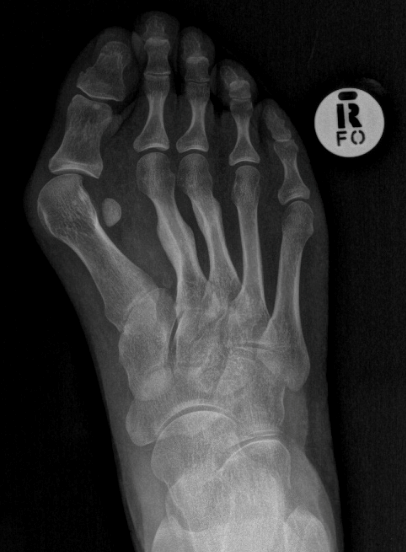
Image courtesy of Praxis Dr. Lengerke
Bunions are a common condition – a condition which may look unsightly but it is nothing to be majorly concerned about. They present as a large bump on the outward-facing side of the big toe and typically feel stiff and painful. This abnormality is mostly genetic and due to structural differences in the foot. The metatarsophalangeal (MTP) joint ends up pushing outward and the tip of the big toe points in, pushing against the other toes. Over time, this pushing leads to a bumpy protrusion.
If you have flat feet, very flexible ligaments, and an abnormal bone structure, then you are far more likely to get bunions. High heels and narrow shoes can make this condition worse by forcing feet and toes into unnatural positions but they do not cause bunions. Nevertheless, shoe shopping for those affected is, of course, very difficult and it can be hard to find shoes that don’t dig in and cause pain.
What Can You Do to Ease the Pain?
Bunions can decrease one’s quality of life in that they make daily tasks that require you to stand on your feet unbearable. Thankfully, there are a few things you can do to relieve the pain.
- Get custom shoes made that are fitted to your feet (an orthotic specialist can help with this) or get custom insoles that you can fit into your shoes.
- Purchase gel-filled pads to act as a buffer against rubbing shoes.
- Take pain killers/anti-inflammatory medication such as ibuprofen and aspirin.
- If you are overweight, you should try join a weight loss programme. Dropping a few kilos will place less pressure on your feet.
- Get cortisone injections.
- Soak your feet in a warm Epsom salt foot bath.
If none of the above measures provide enough relief and you have a more severe deformity that needs to be corrected, then you can discuss your options with your orthopaedic specialist. Surgery is an option for some, but it needs to be carefully considered. Surgery will require you to be off your feet for quite some time, and so this needs to be taken into account. The most common type of surgery is called a bunionectomy, where the positioning of the big toe bones is corrected, and swollen tissue is removed from the affected joint.
If you suspect you have bunions, don’t panic. Dr Praven can easily assess and diagnose this condition by taking an X-ray of your feet and then taking measurements from this. If you do indeed have an MTP deformity, there are many treatment options, which he will discuss with you upon appointment.